Subaru
Designing connected, multi-audience automotive experiences across brand, platform, and product.






Outputs
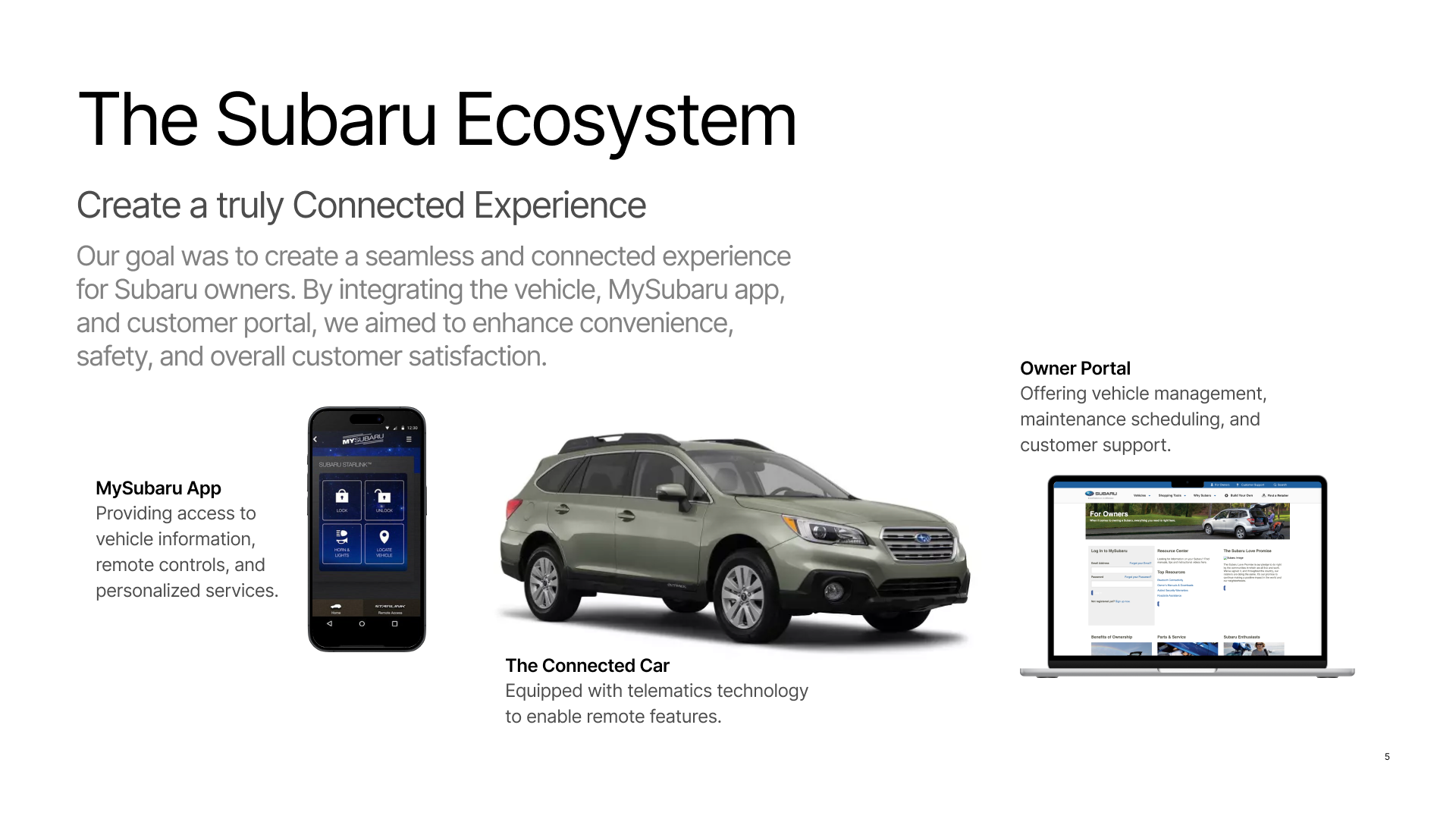
- Connected ownership model: car, app and portal as one system
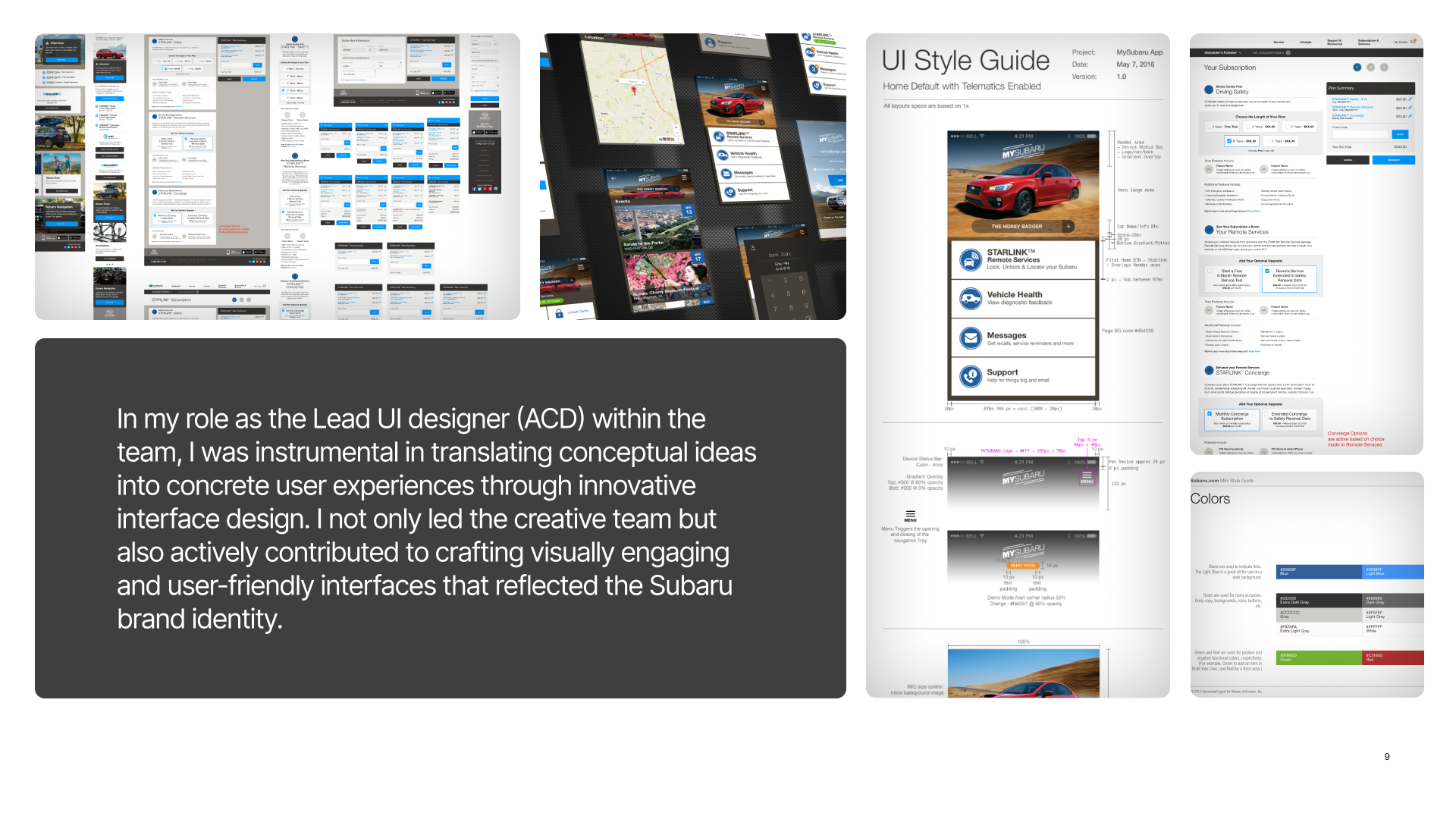
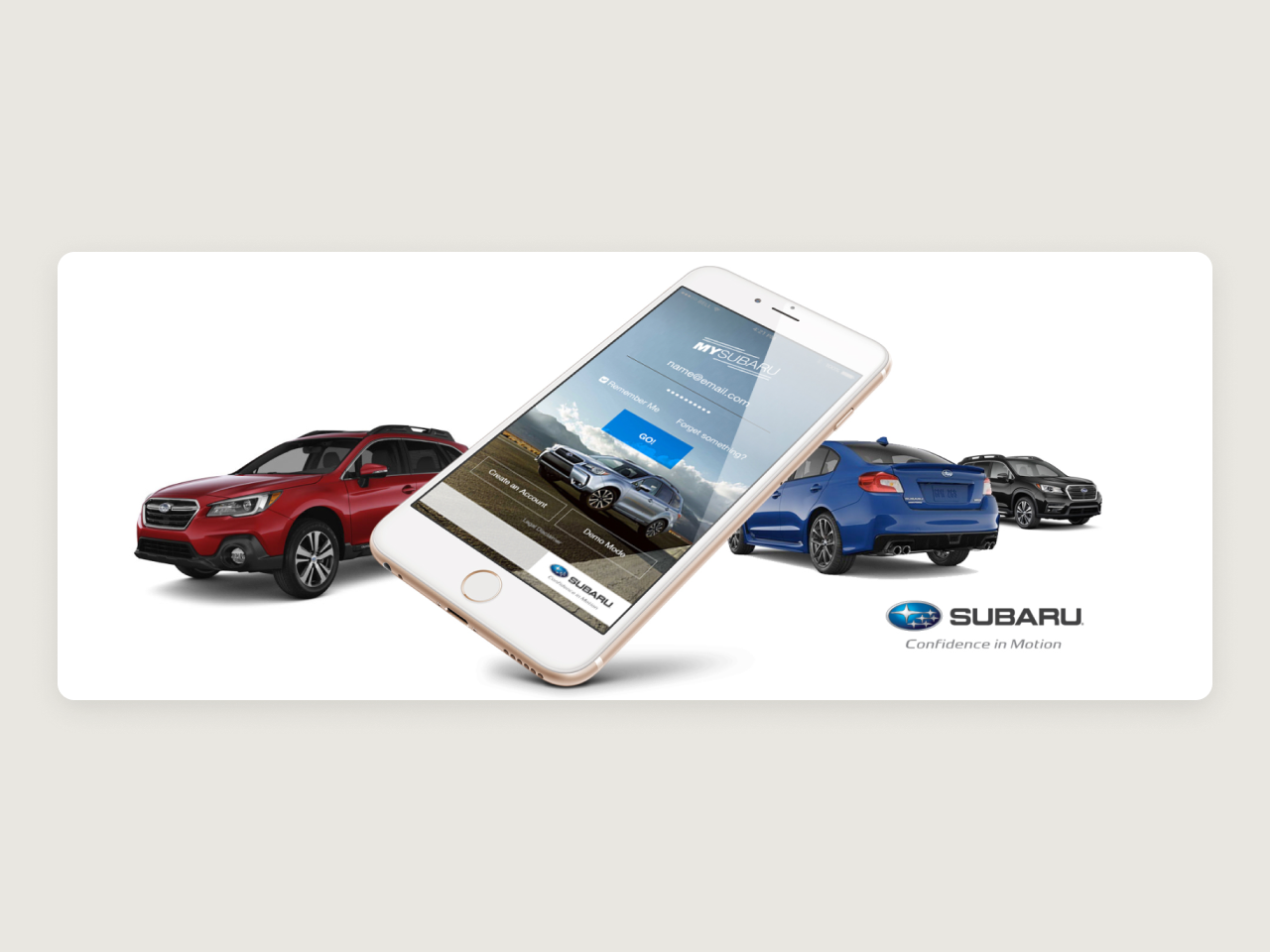
- MySubaru app UI, v1 and v2
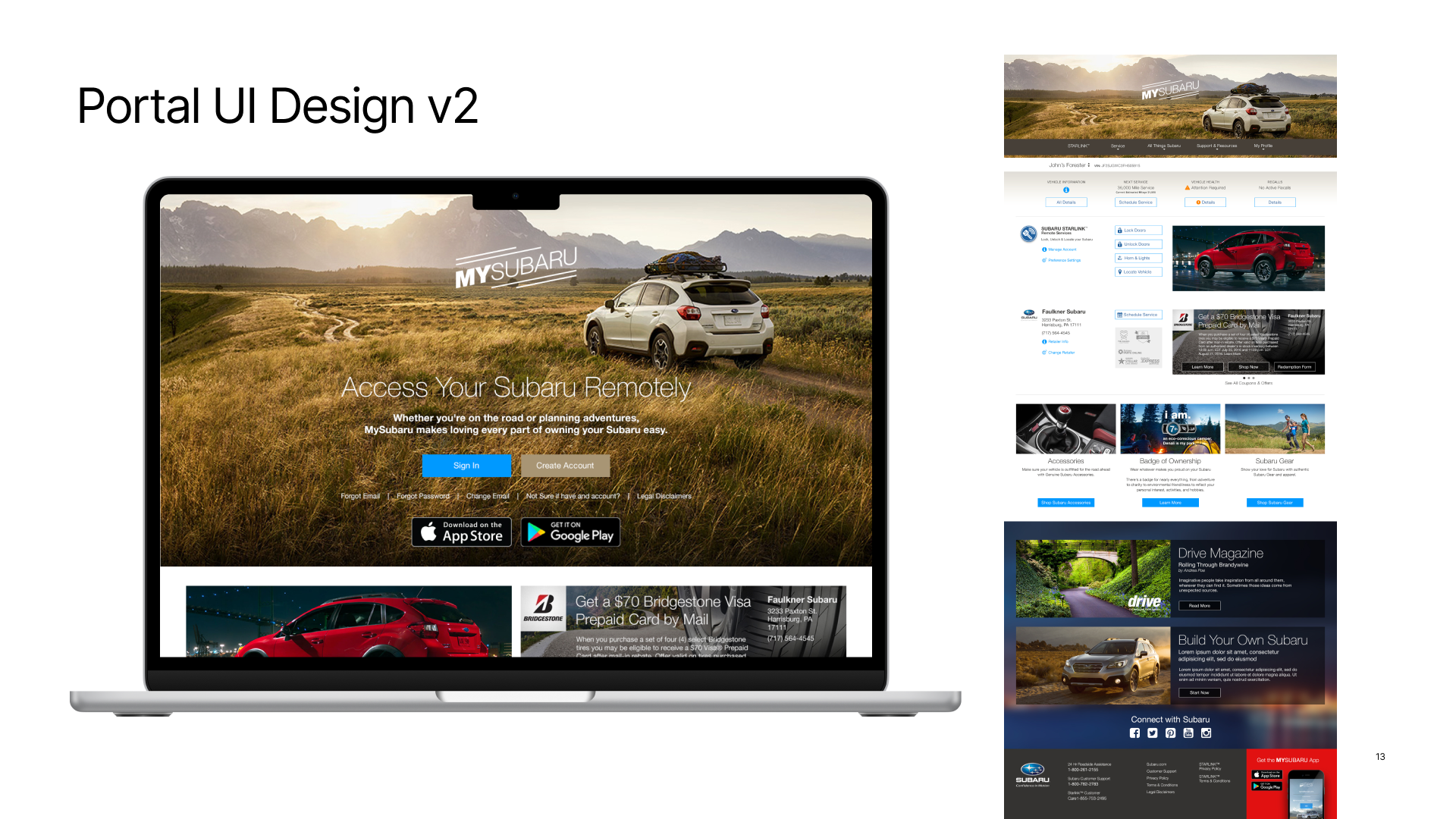
- Owner portal UI, v1 and v2
- Remote controls and telematics feature design
- Multi-vehicle switching for households with more than one Subaru
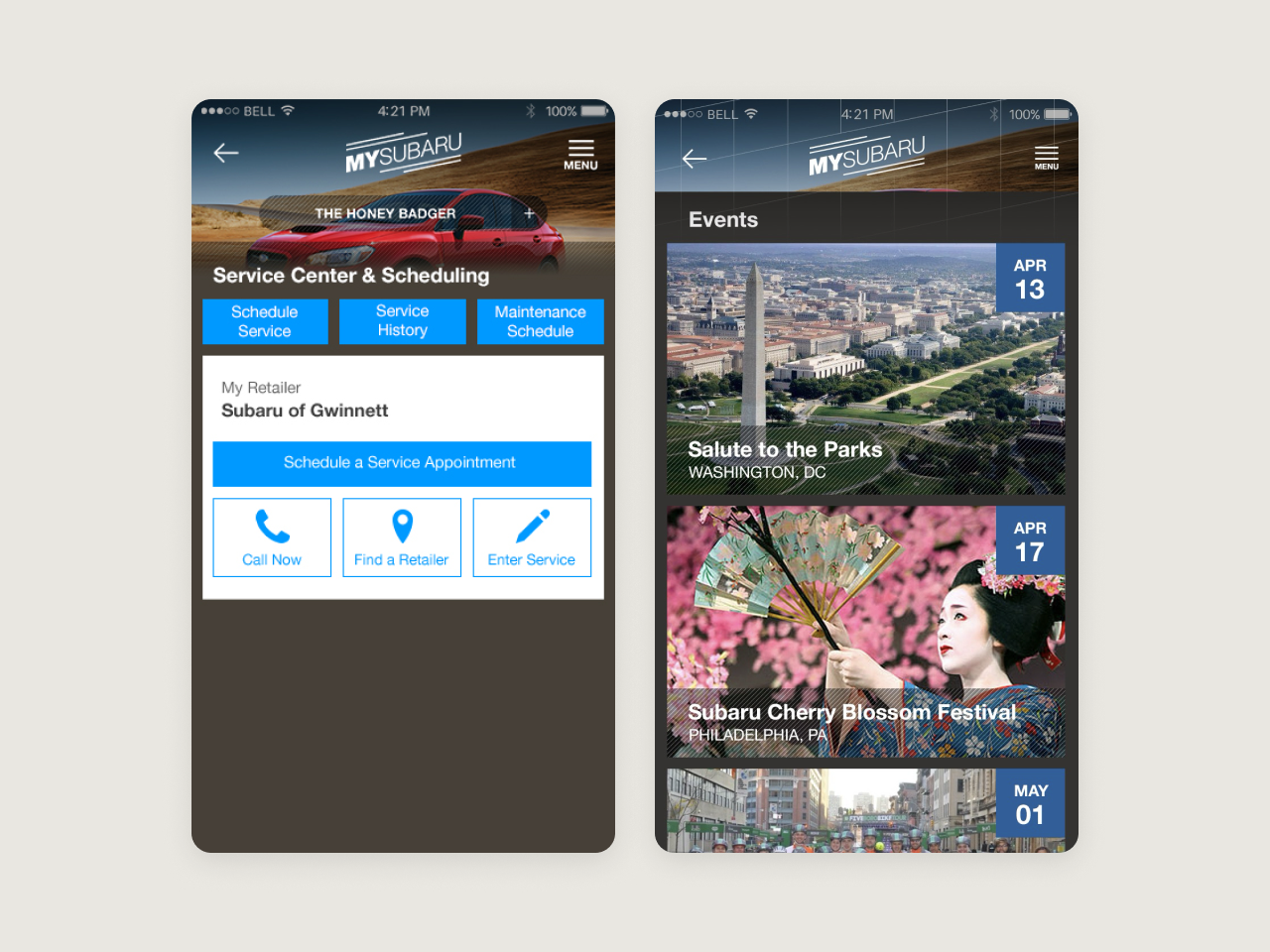
- Service history, manuals and service booking flows
- Component library and design system
- Responsive layouts
- Icon design
- Prototypes with motion, for user testing
- User flows and storyboards
- Client
Subaru
- Sector
Automotive & Mobility
- Disciplines
- Year
2016–2018
- Role
Associate Creative Director and Lead UI Designer
- Agency
LiquidHub (now Capgemini), Atlanta office
- Team
Michelle Berryman, Principal Consultant and Senior Director, Innovation & Strategy Alison McKenna, Strategist and UX Designer
- Live site
- Visit the live site
Hindsight
Not 1-to-1 experiences
Apps and portals are not 1-to-1 experiences, so figuring out how best to create experiences and robust features was the challenge. Connected with the vehicle as one ecosystem, the app and portal help not only the owner but Subaru service centers provide next-level service, with the right information for the right user. An owner may have several Subarus in the family, so the app had to switch from one car to another. All of this made for complex designs.
Helping one to help the other
The dealer and owner relationship was a key insight: understanding what each audience valued and how they related within the experience. It was a case of helping one to help the other, while keeping Subaru's brand promise to the owner. Features built for only one audience wouldn't have let that relationship grow. The app would just have been a tool, with the service team using some features and the owner using others.
Layers, not handoffs
My ACD role started traditional: taking wireframes and building out designs. Maturing with design systems, I could break wireframes into component libraries aligned with brand standards. But the process was linear: strategy, then UX, then UI, then dev. I started seeing value in each skill set adding a layer, not a handoff. That led to opening projects with a workshop of everyone who'd touch the work, ending the old habit of throwing it over the fence. I still apply it today.