FIDx
Architecting a high-performance comparison platform that empowers financial advisors to navigate complex annuity data with speed, clarity, and confidence.







Outputs
- Stakeholder and agent interview insights
- User and business goals
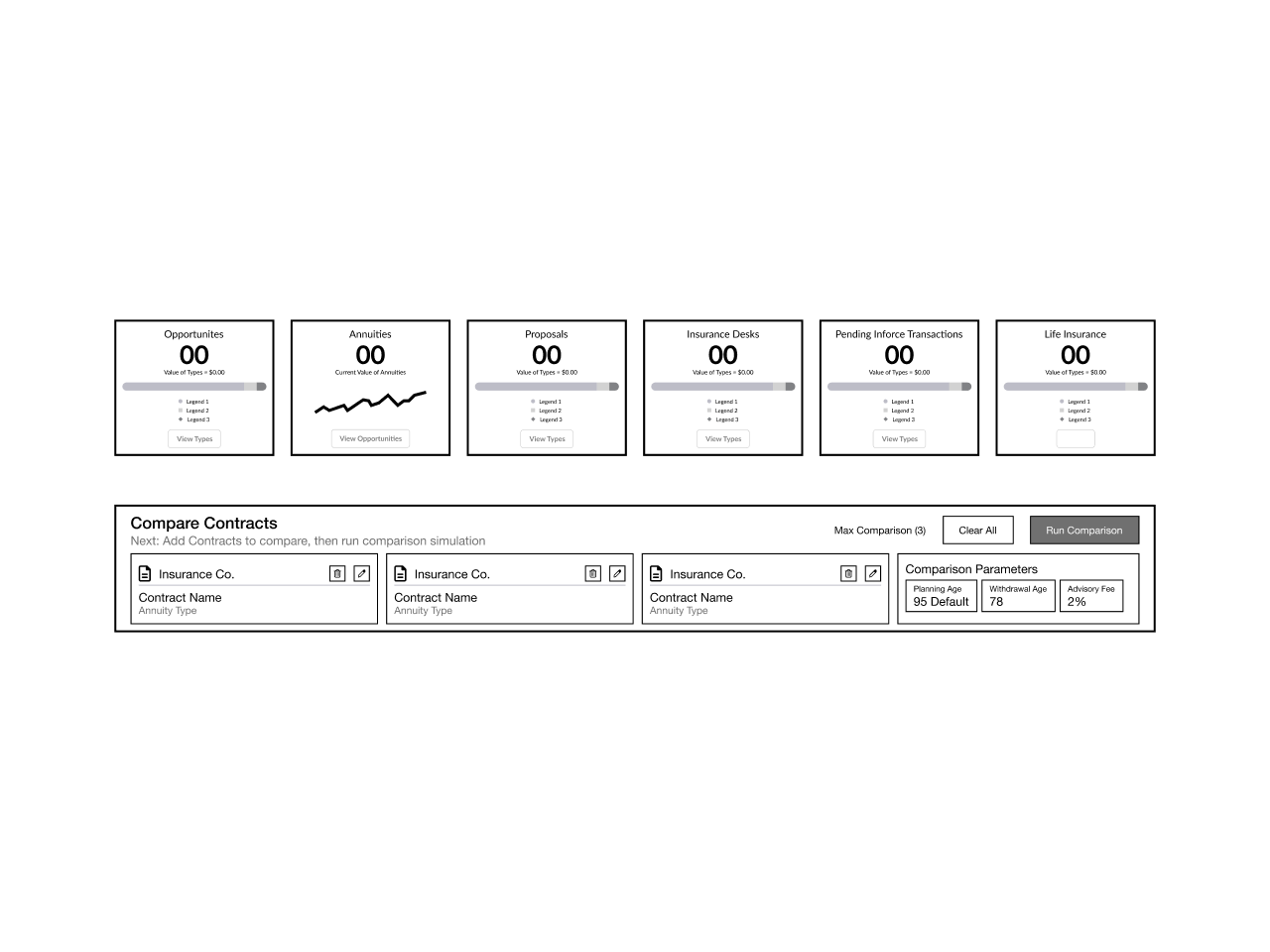
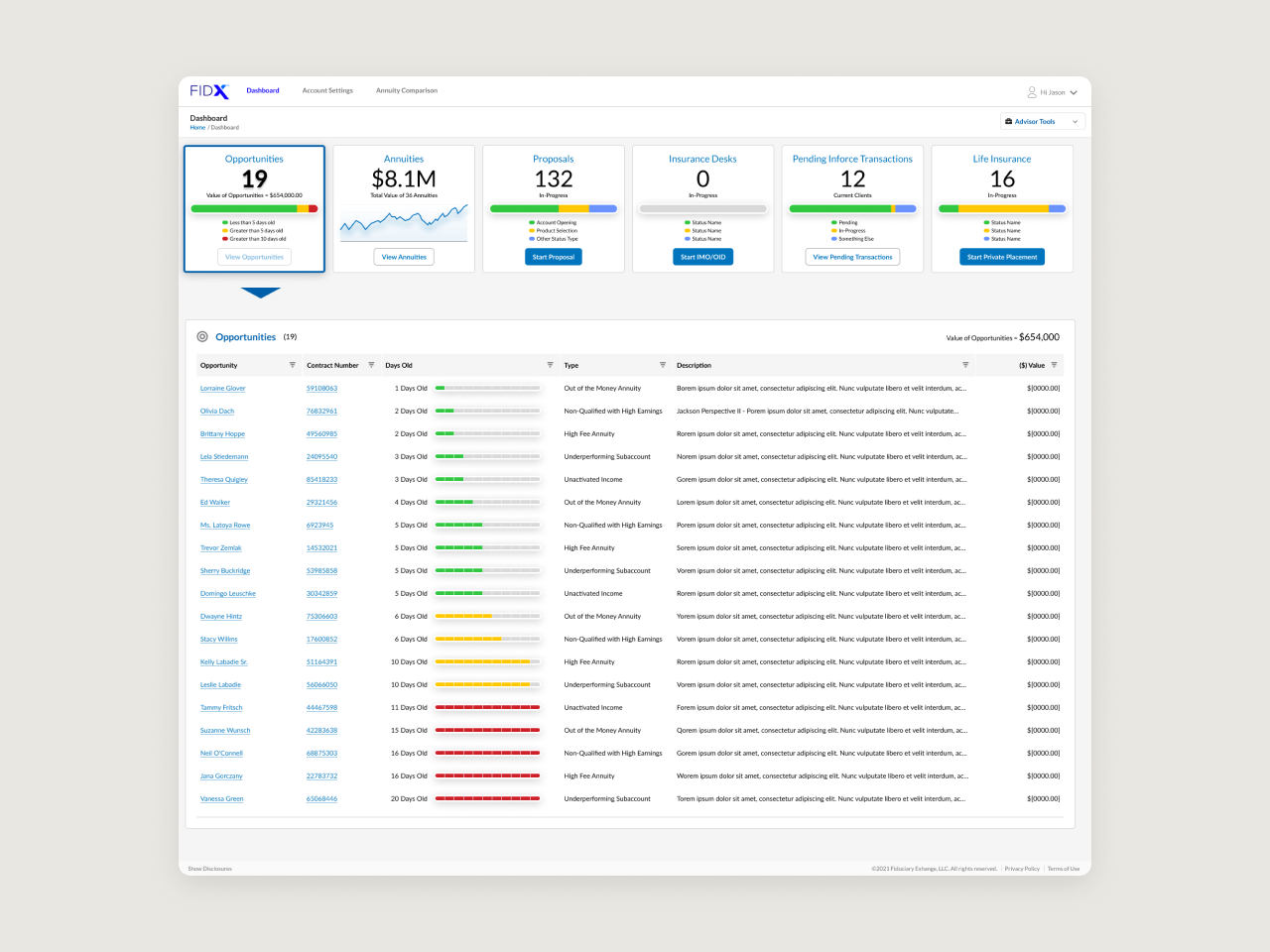
- User flow from the Opportunities view
- Feedback and status components
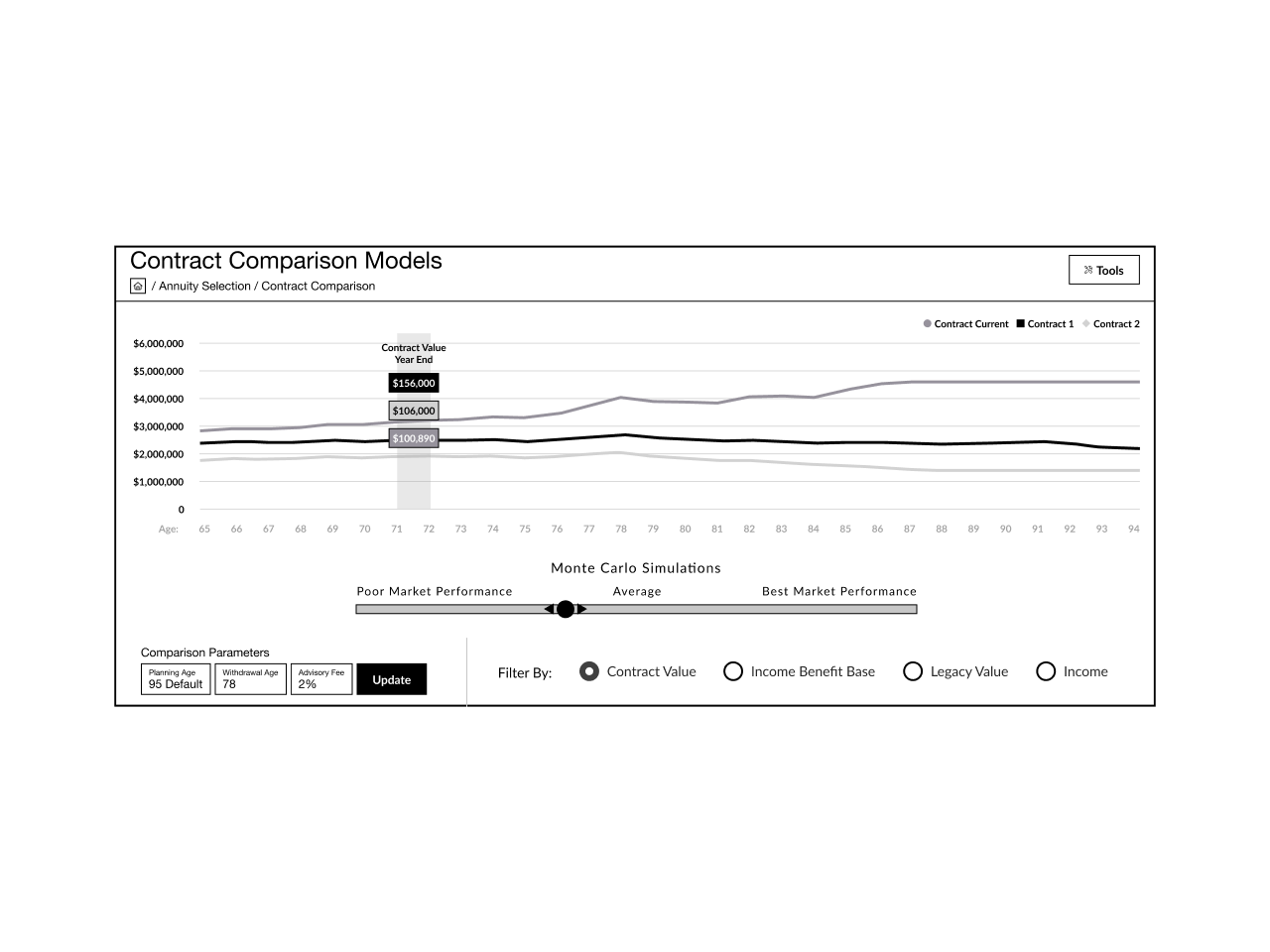
- Interactive annuity comparison chart
- Adjustable Monte Carlo simulation
- Wireframe proof of concept
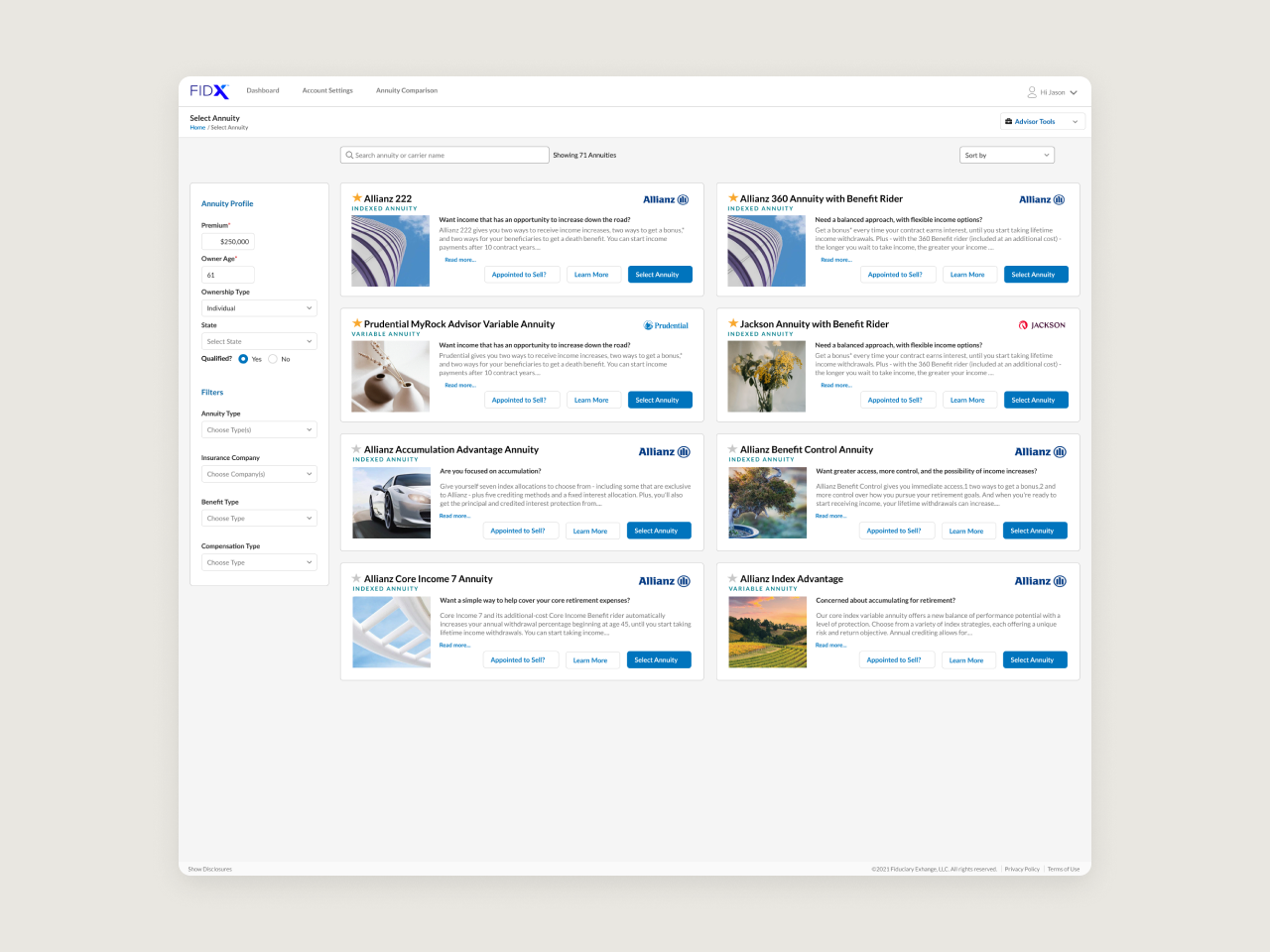
- High-fidelity prototype in the platform design system
- User testing with agents
- Client
FIDx
- Sector
Finance & Insurance
- Disciplines
- Year
2024
- Role
Creative Director UX/UI/CX
- Agency
nimbl Consulting
- Team
Mike Margerum, Software Architect Heath Durrans, Director
- Live site
- Visit the live site
Hindsight
Not one to one
Agents were eager to give feedback, going into great detail about their pain points. Annuity policies carry lots of data, but policies from provider to provider aren't comparable one to one. The trick was a system that allowed for that inconsistency. Then the features and functions became easier and scalable. I'm not sure there was ever a defined process for data-heavy tools before this project. We had to map things out and do the hard work.
I'm a hybrid designer
We had a design system already built for the logged-in experience, so we used what was there. Because I was doing both the UX and the UI, as a hybrid designer, I could design them at the same time. That kept cost and risk low. I don't often push back on requests like that, given the situation and timeline. Had I not been comfortable with both, I might have decided differently.
Same destination
Everyone sets up design systems differently, so there's a learning curve. I expect things won't be built the way I'd build them. It's like getting directions from three different people: the routes differ, the destination is the same. When we exhausted the system's elements, we stepped back and agreed what the new components should be and how hard each feature would be to build. I never present ideas without development input. That risks designing something you can't build.