Honeywell
Extending a new design language from Honeywell's public marketing sites into their client-facing transaction portals — built for scale across many business divisions.






Outputs
- Configurable portal system (features on or off per division)
- Portal templates
- Common requirements
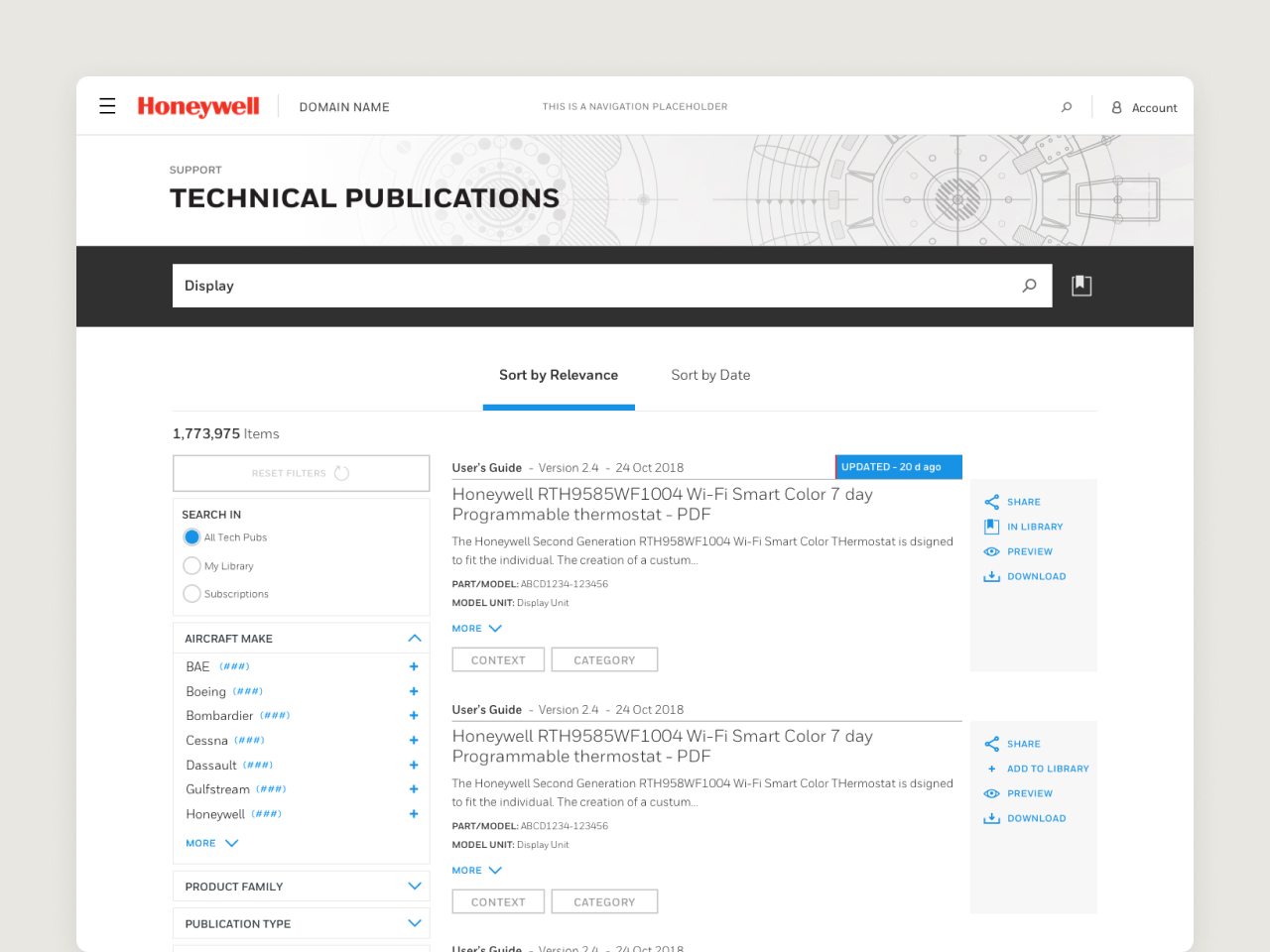
- Responsive technical-document search
- Document subscriptions
- Return merchandise flow
- User flow diagrams (10–16 scenarios)
- Clickable prototype pages
- Client
Honeywell
- Sector
Enterprise Platforms & Internal Systems
- Disciplines
- Year
2018
- Role
UI/UX Product Designer
- Agency
Capgemini, Atlanta office
- Team
Michael Mafodda, Team Lead, Strategy and Workshop Facilitator JB Fuoco, Project Manager and Business Analyst Joe Sokohl, UX Designer
- Live site
- Visit the live site
Hindsight
Not mirror images
Honeywell's divisions aren't mirror images of each other. Consumer products and appliances need a different database structure than aerospace parts. But the steps a person takes to manage product manuals and documents can be the same, and the patterns and form factors can be identical. That's what let the design system scale, and what made it possible for one company-wide governance team to manage it.
Flows became a deliverable
We had 10 to 16 scenarios running through almost the same screens and components. User flow diagrams let the design team and Honeywell stakeholders see every path and its nuances at once. They became our tool for approvals and for checking that user requirements and stories were right, and a handoff deliverable as important as the design system specs. The clickable prototype then confirmed behaviors, and showed what still needed design: motion, states, hierarchy and grouping.
Behind the login, things get far more complex
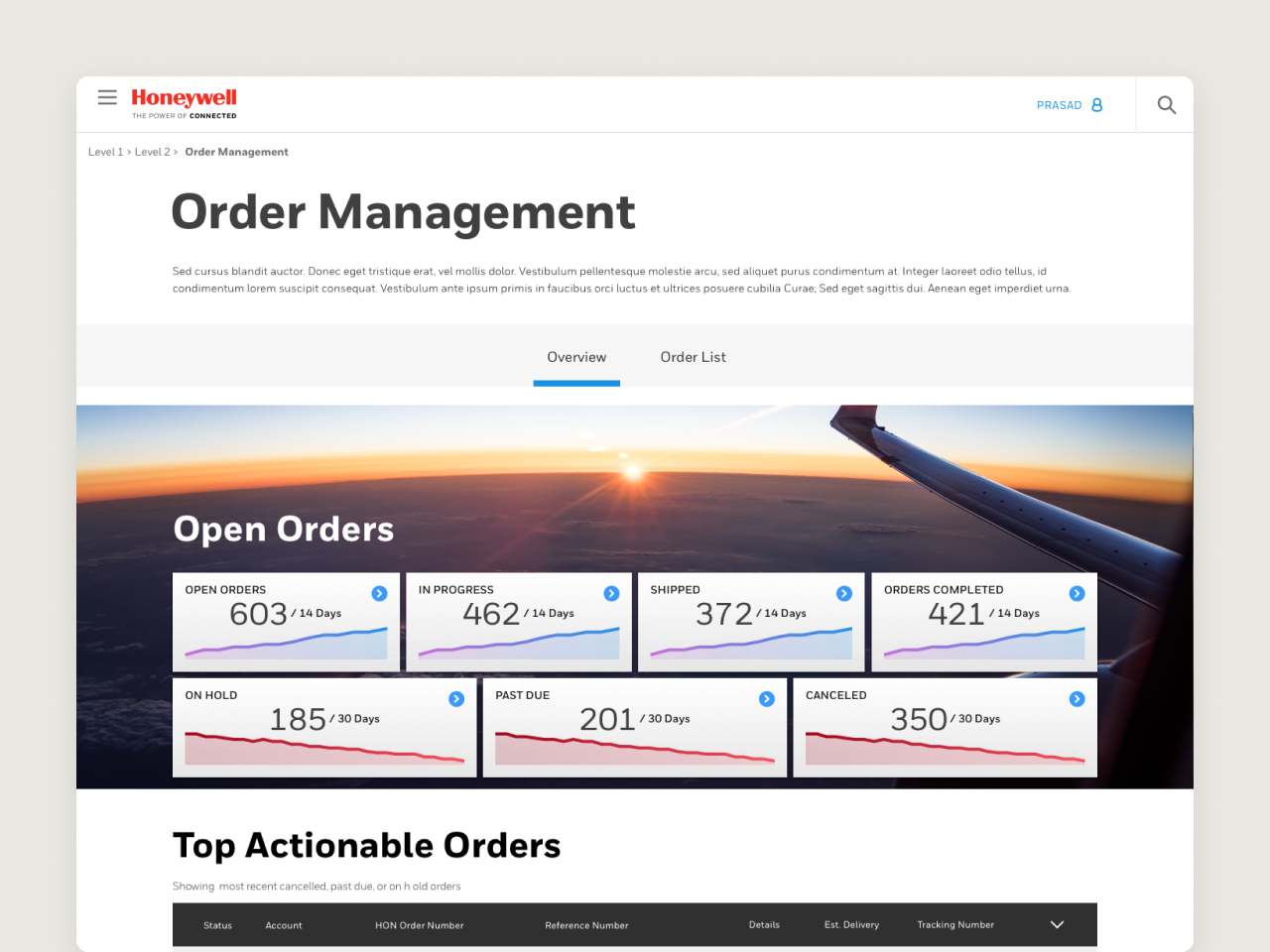
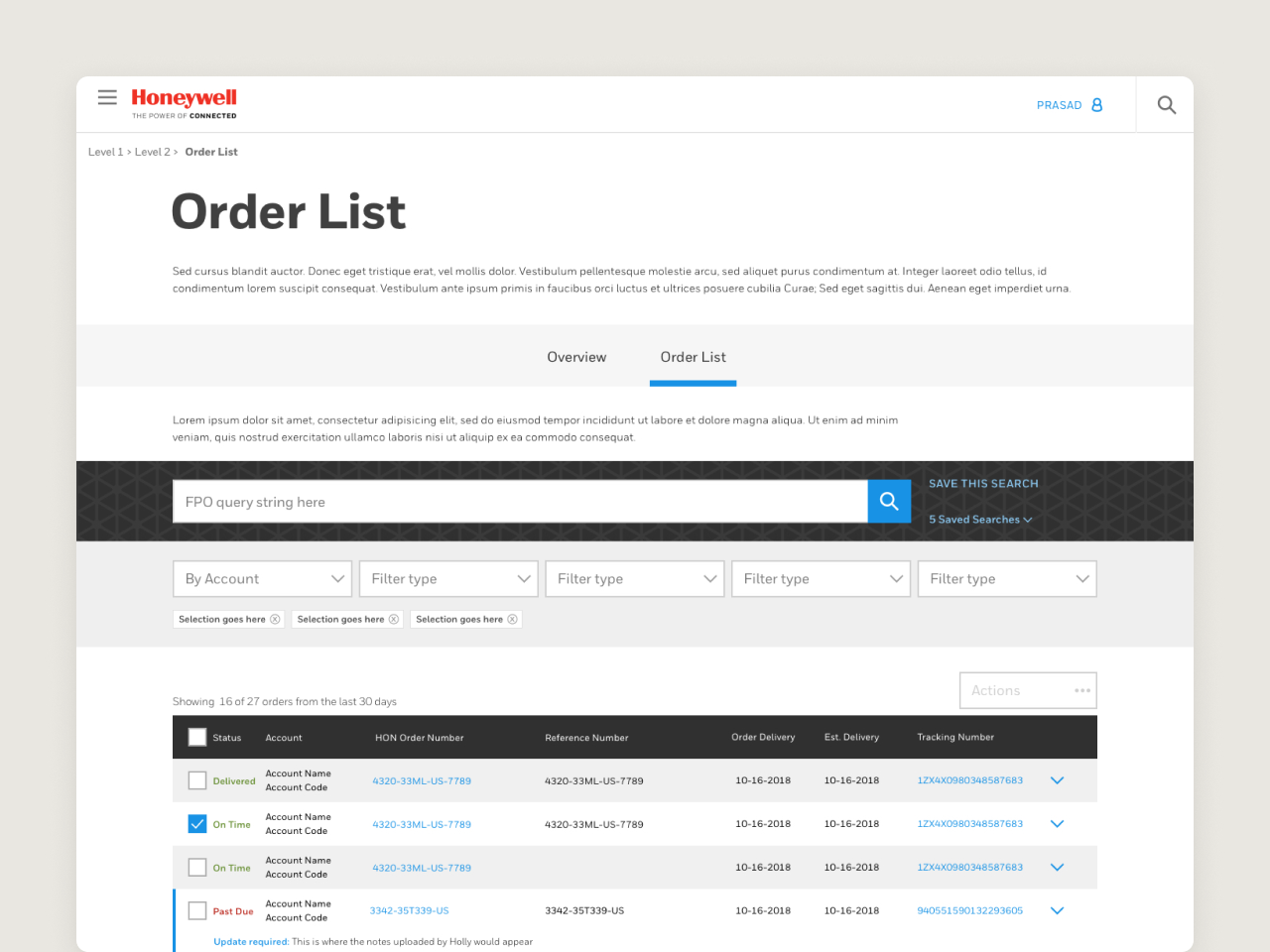
Honeywell's design system was first built for a public marketing site. It was fairly small: components for images, text, simple forms and buttons that rendered informational pages for marketing, sales and PR. Behind the login, things get far more complex: Elasticsearch results, filtering and sorting, product details, data tables, selection, large forms for entering data, and whole experiences for employees to work in. The system had to grow up to meet that.